Agricultural science innovations in soil and crop management
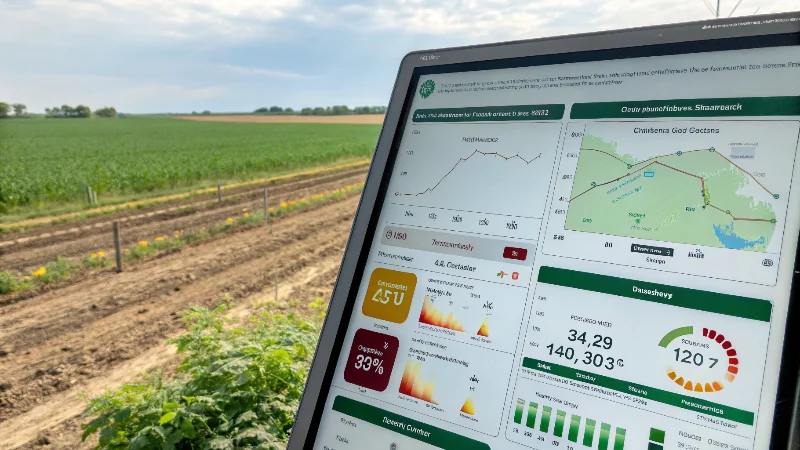
Breakthrough technologies in soil chemistry analytics and crop optimization are revolutionizing agronomic management and production efficiency. Advanced sensor systems now provide real-time nutrient analysis, microbial activity assessment, and moisture profiling at unprecedented spatial resolution. Precision crop management tools integrate weather forecasting, growth modeling, and economic analysis to optimize every input application decision. These innovations enable farmers to move beyond traditional uniform field treatment toward site-specific management that accounts for within-field variability, dramatically improving resource use efficiency and environmental sustainability. Research institutions and agricultural technology companies continue developing increasingly sophisticated tools that help producers maximize yields while minimizing inputs and ecological impacts.
Soil Chemistry Analytics Advances
Modern soil analysis technologies deliver insights far beyond conventional laboratory testing capabilities. Portable spectroscopy systems provide instant nutrient readings in the field, eliminating delays associated with traditional sampling and laboratory processing. DNA sequencing identifies soil microbial communities and their functional capabilities, revealing biological fertility factors invisible to chemical tests. Electromagnetic sensors map soil properties across entire fields in minutes, generating detailed variability maps that inform precision management strategies.
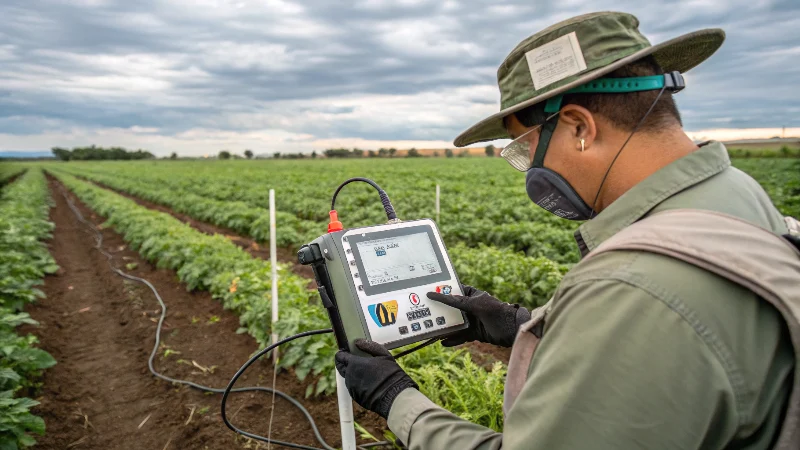
- Near-infrared spectroscopy enables non-destructive tissue analysis that identifies nutrient deficiencies before visible symptoms appear, allowing proactive rather than reactive fertility management
- Ion-selective electrodes provide real-time soil solution chemistry monitoring, helping farmers optimize fertigation programs and avoid both deficiency and toxicity problems
- Electrical conductivity mapping reveals soil texture patterns and water-holding capacity variations, guiding variable rate seeding and irrigation management across heterogeneous fields
- Microbial biomass quantification through ATP analysis assesses soil biological activity, indicating decomposition rates and nutrient mineralization potential that influence fertilizer timing decisions
Technology Impact Assessment
The table below summarizes how emerging soil and crop management technologies improve key agricultural outcomes compared to conventional management approaches, demonstrating the practical value of these scientific innovations.
| Management Outcome | Conventional Methods | Innovation-Enhanced Methods |
|---|---|---|
| Nitrogen Use Efficiency | 40-60% plant uptake | 70-85% plant uptake |
| Irrigation Water Savings | Baseline consumption | 15-30% reduction |
| Yield Consistency | High field variability | Reduced variability through targeted management |
| Input Cost per Unit Production | Standard industry rates | 10-20% reduction through optimization |
"Precision soil and crop management technologies represent the most significant agronomic advancement since the Green Revolution. These tools finally enable us to match inputs precisely to crop needs at previously impossible spatial and temporal scales."
Crop Optimization Tools
Integrated crop management platforms combine multiple data sources to generate comprehensive recommendations that optimize production while minimizing environmental impacts. These systems incorporate weather forecasts, soil conditions, crop growth stage, pest pressure, and economic factors into unified decision support frameworks. Machine learning algorithms identify patterns in multi-season datasets, continuously improving prediction accuracy and recommendation quality. Variable rate application equipment executes site-specific management plans with precision, delivering the right input at the right rate, time, and location throughout each field. As these technologies mature and become more accessible, adoption will expand beyond early innovators to mainstream producers, transforming agricultural practices industry-wide. The ongoing convergence of agronomy, data science, and engineering continues generating innovations that enhance both productivity and sustainability in modern farming systems.